Tuesday, October 31, 2006
Lawrence and a Sexual Autonomy Right to Obscenity
Eugene Volokh analyzes "whether Lawrence v. Texas means that obscenity laws are unconstitutional, on a sexual rights theory even if not a speech rights theory." His analysis is available here at his blog The Volokh Conspiracy.

Racial Preferences on Ballot in Michigan
The NYTimes has a story today that begins:
We will read the Michigan racial preference cases that triggered this initiative later this semester. Initiatives like this tend to poll under the radar, because many people fear saying they support a measure against the wishes of the ruling establishment and the shapers of what is politically correct. I think it will pass because people tend to vote their true conscience in the privacy of the voting booth. And most people do not believe that racial preferences are consistent with the promise of racial equality under the 14th Amendment.
Three years after the Supreme Court heard Jennifer Gratz’s challenge to the University of Michigan’s affirmative action policy, she is still fighting racial preferences, this time in a Michigan ballot initiative.
“We have a horrible history when it comes to race in this country,” said Ms. Gratz, 29, a white applicant who was wait-listed 11 years ago at the state’s flagship campus here. “But that doesn’t make it right to give preference to the son of a black doctor at the expense of a poor student whose parents didn’t go to college.”
The ballot initiative, Proposition 2, which would amend Michigan’s Constitution to bar public institutions from considering race or sex in public education, employment or contracting, has drawn wide opposition from the state’s civic establishment, including business and labor, the Democratic governor and her Republican challenger. But polls show voters are split, with significant numbers undecided or refusing to say where they stand.
Passage would probably reinvigorate challenges to a variety of affirmative action programs in other states.
We will read the Michigan racial preference cases that triggered this initiative later this semester. Initiatives like this tend to poll under the radar, because many people fear saying they support a measure against the wishes of the ruling establishment and the shapers of what is politically correct. I think it will pass because people tend to vote their true conscience in the privacy of the voting booth. And most people do not believe that racial preferences are consistent with the promise of racial equality under the 14th Amendment.
Sunday, October 22, 2006
Scalia on Judicial Independence vs. Judicial Activism

Here is an excerpt of what Hizzoner had to say:
Scalia, during a talk on the judiciary sponsored by the National Italian American Foundation, dismissed the idea of judicial independence as an absolute virtue. He noted that dozens of states, since the mid-1800s, have chosen to let citizens elect their judges.
"You talk about independence as though it is unquestionably and unqualifiably a good thing," Scalia said. "It may not be. It depends on what your courts are doing."
Scalia added, "The more your courts become policy-makers, the less sense it makes to have them entirely independent."
Here is a link to the AP article.
Wednesday, October 18, 2006
More on Partial Birth Abortion case
Gonzales v. Carhart: The Supreme Court Once Again Considers "Partial-Birth Abortion" by Sherry Colb is online at Findlaw.
Sunday, October 15, 2006
Religious Liberty in the UK--Not!

Here is a link to an article about religious persecution directed against Muslim women by UK government officials. Here is a key excerpt:
A British government minister joined an increasingly bitter debate about the rights of Muslim women to veil their faces, saying a teaching assistant should be fired for insisting on wearing one in school.
Phil Woolas, the government's Race and Faith minister, was quoted by the Sunday Mirror newspaper as demanding that Aishah Azmi, a Muslim teaching assistant, be fired for refusing to remove her veil at work.
"She should be sacked. She has put herself in a position where she can't do her job," Woolas said.
....
The debate on the veils began earlier this month, when Jack Straw, the former foreign secretary who now serves as leader of the House of Commons, said Muslim women visiting his office should remove their veils.
Monday, October 09, 2006
Lochner and the Liberty of Consenting Adults
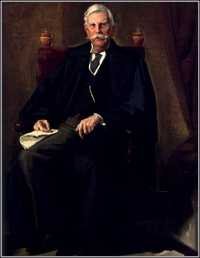
Notice that Lochner views Substantive Due Process as protecting the liberty of consenting adults to enter into any contract that pleases them, so long as no third party is harmed by their conduct. The decision protects the right of adults to choose--to make economic choices and to enter into economic relationships with other consenting adults.
Should laws that restrict the right of consenting adults to agree to wages, hours, rents, and other terms and conditions of their economic lives be held to violate the "liberty" protected by the Constitution? Does government have the right to impose a particular view of social justice and public morality on consenting adults who wish to enter into "unfair" or "immoral" or "unhealthy" agreements?
If you think the right of consenting adults to agree to labor on terms of their choosing is not a protected constitutional liberty, what about the liberty of consenting adults to engage in various types of sexual conduct and relationships? Should the state be allowed to regulate consensual sexual conduct under the police power--the power to pass laws to advance public health, safety, morals or the general welfare?
In other words, if you believe that the Constitution protects the "liberty of the citizen to do as he likes [in the bedroom] so long as he does not interfere with the liberty of others to do the same," (Holmes opinion at p. 520), then shouldn't adult citizens also have the right to do as they please in their economic lives? If your answer is no, why is paternalism and public morality a legitimate basis for legislation in the conference room, but not in the bedroom?
Why should we think SubstantiveDue Process protects the sexual autonomy and right of choice of adults, but not the economic autonomy and right of choice of adults? Is it because the one liberty is "fundamental" and the other is not? How do you know this? Which language or principle in the written Constitution supports your analysis?
Monday, October 02, 2006
"Moderate" Justices and Ideological Decisionmaking

Are so-called "moderate" Justices, such as O'Connor and Kennedy, less (or more) likely to engage in ideological judging? Over at the Volokh Conspiracy, Ilya Somin says perhaps more:
Indeed, in two important ways moderate jurists may be more prone to ideological judging than more extreme ones. First, moderate judges such as Justices O'Connor and Kennedy, are more likely to favor complex balancing tests than strong liberals and conservatives, who are more likely to favor bright line rules. Balancing tests tend to leave more scope for judicial discretion (and thus ideological decisionmaking) than rules do.
Second, I suspect that moderates are less likely than comparative extremists to realize that their political preferences are the products of a contestable ideology rather than of simple, nonideological "common sense." Indeed, Garrow's own article partially endorses this fallacy, to the extent that he assumes that moderate views are, by nature, less "ideological" than extreme ones. Of course, if you believe that your views are just common-sense truths that only extremist wingnuts/moonbats could disagree with, you are less likely to be hesitant about imposing them on others through the use of judicial power.
Hmmm. What do y'all think?
Tuesday, September 19, 2006
Does the Court Follow the Times?

Todd Zywicki has a great post over at the Volokh Conspiracy. Here is a major excerpt:
New York Times Hypothesis:
Awhile back, around the time of Lawrence and Grutter in particular, the hypothesis was floated--mainly in jest, I assume--that the best predictor of Surpreme Court outcomes in many socially and politically controversial cases was the conventional wisdom of America's political and legal elite. And that this consensus could be captured in an operative variable as being the expressed position of the New York Times Editorial Board (perhaps the Washington Post Editorial Board as well).
The Court's ruling in Kelo got me thinking about this hypothesis again, and so I went back and looked at the New York Times Editorials in three recent cases that came to mind as perhaps the most obvious tests of the hypothesis--Kelo, Raich, and Granholm. Sure enough, traditional legal variables seem to do fairly poorly in predicting the results in those cases, as many have noted. The composition of the majorities and minorities are all over the place with little consistency.
But one variable does hit the mark three out of three times--in each case, the Supreme Court ruling met with the approval of the New York Times Editorial Page. Moreover, Kennedy--who has typically been characterized by critics as being the most susceptible to being swayed by elite opinion--voted with the Times, I mean the majority, in each of the three cases (by my calculation, he was the only one who did so).
In addition to Lawrence and Grutter, of course, the New York Times variable also accurately predicted the outcome in the Campaign Finance Reform case. I haven't double-checked whether Kennedy voted with the majority in each of those three as well.To the best of my knowledge, no one has ever taken the "New York Times Hypothesis" seriously enough to test it empirically, but at first glance at least, it looks like it has some pretty good predictive power. If someone has run regressions on this, obviously I would be interested in the results.
Justices just want love--from people in power. So they do what it takes to earn that love.
Monday, September 18, 2006

Friday, September 08, 2006
Public Expression of Religion Act

From the Religion Clause blog:
By voice vote yesterday, the House Judiciary Committee approved H.R. 2679, the Public Expression of Religion Act. The bill, which now goes to the full House of Representatives, would limit relief in Establishment Clause claims to issuance of an injunction, and would deny the award of attorneys' fees and expenses to plaintiffs who win Establishment Clause lawsuits. Americans United For Separation of Church and State strongly criticized the Committee's action. AU Executive Director Rev. Barry W. Lynn said: "This bill is nothing more than an attempt to scare people away from having their day in court. The House Judiciary Committee should be ashamed of itself for passing such a blatantly un-American scheme."
Notice this is a way to check the Court's EC jurisprudence without limiting its jurisdiction. The provision denying attorney's fees in EC cases is huge!
Thursday, September 07, 2006

Tuesday, August 29, 2006
House votes to protect Pledge
Link
Excerpt:
The House yesterday voted to protect the "under God" phrase of the Pledge of Allegiance from judges who might declare it unconstitutional, the measure being another element of the Republican-pushed values agenda in the lead-up to the fall elections.
Supporters said the Pledge Protection Act, which passed on a 260-167 vote, was necessary because of court decisions such as a 2002 ruling in California from the 9th U.S. Circuit Court of Appeals. The court ruled it an unconstitutional "endorsement of religion" to require public-school students to recite the Pledge in its current form. In 1954, Congress added the words "under God" to demonstrate opposition to atheistic communism.
The Pledge Protection Act was backed by 221 Republicans and 39 Democrats, with eight Republicans, 158 Democrats and the chamber's only independent opposed.
"Judges should not be able to rewrite the Pledge," said Majority Whip Roy Blunt, Missouri Republican.
The measure denies federal courts the jurisdiction to rule on interpretation of the Pledge and forbids the Supreme Court from ruling on Pledge appeals. State courts would be free to decide the matter as a state issue.
"We must step in," said Rep. Todd Akin, the Missouri Republican who sponsored the bill. He called it Congress' responsibility to "stand up to the court when they are misusing the Constitution."
Excerpt:
The House yesterday voted to protect the "under God" phrase of the Pledge of Allegiance from judges who might declare it unconstitutional, the measure being another element of the Republican-pushed values agenda in the lead-up to the fall elections.
Supporters said the Pledge Protection Act, which passed on a 260-167 vote, was necessary because of court decisions such as a 2002 ruling in California from the 9th U.S. Circuit Court of Appeals. The court ruled it an unconstitutional "endorsement of religion" to require public-school students to recite the Pledge in its current form. In 1954, Congress added the words "under God" to demonstrate opposition to atheistic communism.
The Pledge Protection Act was backed by 221 Republicans and 39 Democrats, with eight Republicans, 158 Democrats and the chamber's only independent opposed.
"Judges should not be able to rewrite the Pledge," said Majority Whip Roy Blunt, Missouri Republican.
The measure denies federal courts the jurisdiction to rule on interpretation of the Pledge and forbids the Supreme Court from ruling on Pledge appeals. State courts would be free to decide the matter as a state issue.
"We must step in," said Rep. Todd Akin, the Missouri Republican who sponsored the bill. He called it Congress' responsibility to "stand up to the court when they are misusing the Constitution."
Alito Article
From How Appealing (link):
"Alito: The life and times of a justice in the making." Because The Newark (N.J.) Star-Ledger is a newspaper whose articles do not remain online for long, I'm going to break with my usual vacation-week practice to note that today's edition of that newspaper contains an article headlined "Alito: The life and times of a justice in the making."
The article explains, "With the court in summer recess, Sam Alito and his wife, Martha-Ann, agreed earlier this month to their first interviews since he was confirmed. They talked about the Senate hearings, about her tearful breakdown during a now famous session. He also spoke about the inner workings of one of the most closely watched courts in the nation's history."
"Alito: The life and times of a justice in the making." Because The Newark (N.J.) Star-Ledger is a newspaper whose articles do not remain online for long, I'm going to break with my usual vacation-week practice to note that today's edition of that newspaper contains an article headlined "Alito: The life and times of a justice in the making."
The article explains, "With the court in summer recess, Sam Alito and his wife, Martha-Ann, agreed earlier this month to their first interviews since he was confirmed. They talked about the Senate hearings, about her tearful breakdown during a now famous session. He also spoke about the inner workings of one of the most closely watched courts in the nation's history."
Friday, August 25, 2006
President Refusing to Enforce Laws He Deems Unconstitutional
Suppose the Supreme Court decides a case, as it did in Plessy v. Ferguson, that reverses Brown v. Board and holds that racially segregated public institutions are not unconstitutional. Now suppose further that Congress passes a law (over the President's veto) that requires public buildings and public facilities to be segregated by race.
The President issues a statement declaring that he disagrees with the Supreme Court's interpretation of the Equal Protection Clause and declares that he will not enforce the segregation law because he believes it is unconstitutional.
Is it proper for the President to follow his interpretation (as opposed to the Court's interpretation) of the Constitution when carrying out his power to "take care that the Laws be faithfully executed" and his oath to "preserve, protect and defend the Constitution of the United States."
The President issues a statement declaring that he disagrees with the Supreme Court's interpretation of the Equal Protection Clause and declares that he will not enforce the segregation law because he believes it is unconstitutional.
Is it proper for the President to follow his interpretation (as opposed to the Court's interpretation) of the Constitution when carrying out his power to "take care that the Laws be faithfully executed" and his oath to "preserve, protect and defend the Constitution of the United States."
Thursday, August 24, 2006
The Great Debate

Here are a couple of questions I submit to you all for comment.
1. There seems to be a consensus that judicial restraint is good and judicial activism is bad. But not everyone agrees what these terms mean. What do you think? What is judicial activism and why is it bad? When should courts exercise restraint?
2. Justice Brennan reads the Constitution as protecting liberty by means of "majestic generalities" such as the "ideal of human dignity." Assuming human dignity is a constitutional ideal, is it one capable of application? How does a Court know what human dignity means in the context of constitutional litigation? Is this any different from reading the Constitution as a general directive to judges to decide all important public policy issues based upon their own subjective preferences (their own view of what "human dignity" means)? Is this consistent with the Constitution's explicit recognition of the most important freedom of all, the freedom of a people to participate in democratic self-government through law?
Wednesday, August 09, 2006
UT Link
link
Now imagine that UNL had an official website that gave some advice about "Spirituality and Fears About the After Life" that included some advice:
James Smith, who was raised in a liberal Unitarian church, suffered from his fear that a truly Holy God could not possibly ignore the reality of sin.
" I was raised in a church that teaches that salvation is universal and is earned, regardless of what you believe, by living a good life. But I know that I am not good, at least not in the eyes of a holy and righteous God. I realized that trusting Jesus and the blood He shed for me on the cross was the only way for me to get past my guilt and my sins. The God I really believed in was a God who was both Holy and Merciful. His holiness demanded that He hate my sin, but in His mercy and His love he sent his Son to die for those who trust in Him."
This is an experience many people go through. Faced with a conflict between their religion and their concept of what God must really be like, they come to realize that a truly righteous God can not grade on the curve and that a truly merciful God would create one path--the way of the Cross--to save those who accept His mercy."
Would this statement of spiritual counseling from UNL officials violate the EC?
Now imagine that UNL had an official website that gave some advice about "Spirituality and Fears About the After Life" that included some advice:
James Smith, who was raised in a liberal Unitarian church, suffered from his fear that a truly Holy God could not possibly ignore the reality of sin.
" I was raised in a church that teaches that salvation is universal and is earned, regardless of what you believe, by living a good life. But I know that I am not good, at least not in the eyes of a holy and righteous God. I realized that trusting Jesus and the blood He shed for me on the cross was the only way for me to get past my guilt and my sins. The God I really believed in was a God who was both Holy and Merciful. His holiness demanded that He hate my sin, but in His mercy and His love he sent his Son to die for those who trust in Him."
This is an experience many people go through. Faced with a conflict between their religion and their concept of what God must really be like, they come to realize that a truly righteous God can not grade on the curve and that a truly merciful God would create one path--the way of the Cross--to save those who accept His mercy."
Would this statement of spiritual counseling from UNL officials violate the EC?
Monday, August 07, 2006
Sunday, August 06, 2006
Link Fixed: Christian Legal Society v. Walker
I fixed the link in the syllabus for this case. Here it is as well. This time I mean it!!!
Friday, August 04, 2006
Poway Hypos
Was the problem for the court in Poway that the banned t-shirt used the word "shameful?" Suppose instead pro-family students wore t-shirts on National Day of Truth proclaiming:
"THE TRUTH SHALL NOT BE SILENCED"
"ONE MAN ONE WOMAN ONE FAMILY"
Would a t-shirt such as this have passed muster under the 9th Circuit's reading of Tinker?
Suppose in, say, Kansas a public school student is disciplined for wearing a t-shirt on the National Day of Silence proclaiming:
"HOMOPHOBIA IS SHAMEFUL"
Could this shirt be banned under Poway due to disruptions that occurred at last year's Day of Silence? Would it matter if the school banned the anti-homophobia t-shirts while permitting students to wear pro-family t-shirts such as the one in the first hypo above?
Let's talk about these issues in today's class!
"THE TRUTH SHALL NOT BE SILENCED"
"ONE MAN ONE WOMAN ONE FAMILY"
Would a t-shirt such as this have passed muster under the 9th Circuit's reading of Tinker?
Suppose in, say, Kansas a public school student is disciplined for wearing a t-shirt on the National Day of Silence proclaiming:
"HOMOPHOBIA IS SHAMEFUL"
Could this shirt be banned under Poway due to disruptions that occurred at last year's Day of Silence? Would it matter if the school banned the anti-homophobia t-shirts while permitting students to wear pro-family t-shirts such as the one in the first hypo above?
Let's talk about these issues in today's class!
Thursday, August 03, 2006
The Right Not to Read a Book With Whores In It
What I would like you all to do is post a comment sharing your views about Hentoff's great chapter on the "right not to read" a book contrary to one's conscience.
Please. Everyone. Speak up! Fill cyberspace with your intelligence!
Nat Hentoff is an old style ACLUer, one who believes that free speech and freedom of thought are at the very core of liberty. He is a friend (well, a friendly acquaintance) of mine and I always enjoy reading his columns. He brings the eye of a journalist--an eye for facts and human details--to his analysis of legal issues.
Please. Everyone. Speak up! Fill cyberspace with your intelligence!
Nat Hentoff is an old style ACLUer, one who believes that free speech and freedom of thought are at the very core of liberty. He is a friend (well, a friendly acquaintance) of mine and I always enjoy reading his columns. He brings the eye of a journalist--an eye for facts and human details--to his analysis of legal issues.
-
 Jack Phillips of Masterpiece Cakeshop (art by Joshua Duncan) "We may not shelter in place when the C...
 -
From Volokh Blog: Brown v. Buhman and Bestiality By Eugene Kontorovich on December 16, 2013 4:16 am in Constitutional La...
-
I. Tinker A student's right to speak (even on controversial subjects such as war) in the cafeteria, the playing field, or "on the...